
Titus Cañete
Titus Cañete is a marine biologist and emerging deep-sea ecologist from the Philippines, dedicated to making deep-sea research more accessible through local innovation and inclusive science. He has worked with various environmental agencies and nongovernmental organizations, and currently serves as the project lead for the Large Marine Vertebrates Research Institute Philippines’ (LAMAVE) Deep Sea Shark Research and Conservation Project. His experience includes deep-sea shark fisheries research and the development of accessible ocean technologies—such as low-cost deepwater camera systems and environmental sensors. In previous roles, he contributed to the establishment of marine protected areas, and his recent work with LAMAVE supported the designation of two Important Shark and Ray Areas (ISRAs) in the Philippines. Cañete is focused on increasing local capacity for deep-sea research to better understand and protect deepwater ecosystems while addressing the impacts of human activity. He also collaborated with the Ocean Discovery League on the Global Deep Sea Capacity Assessment, which revealed critical gaps in global access to deep-sea science. A certified rescue diver, he integrates fieldwork with engineering—using tools like GIS, robotics and 3D printing—and works closely with local communities to promote conservation and inspire the next generation of Filipino ocean explorers..
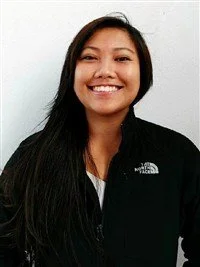
Alexa Abangan
Aliquam bibendum, turpis eu mattis iaculis, ex lorem mollis sem, ut sollicitudin risus orci quis tellus. Vivamus sit amet semper lacus, in mollis libero. Fusce at massa nec sapien auctor gravida in in tellus.
Andrian P. Gajigan
Andrian “Adi” Gajigan is a biochemist and oceanographer who specializes in marine virology and marine disease ecology. He currently holds a Cornell Atkinson Postdoctoral Fellowship at Cornell University, Ithaca, New York. His work bridges molecular-scale processes and ocean-scale patterns to understand how marine microbes, from bacteria and viruses to plankton, shape planetary health. Gajigan earned his Bachelor of Science in bioochemistry and Master of Science in marine science from the University of the Philippines and completed a Ph.D. in oceanography at the University of Hawaiʻi at Mānoa. His scientific path has taken him across both the Atlantic and the Pacific Oceans, participating in numerous research expeditions to study marine life from sunlit surface waters down to the deep sea. In his doctoral work, he developed new host–virus model systems to illuminate how phytoplankton and the viruses that infect them influence ocean ecosystems. Earlier in his career, he contributed to early-warning systems for harmful algal blooms detection and investigated coral responses to heat stress, discovering a microRNA that helps coordinate their resilience. Beyond the lab and field, Gajigan is committed to making science accessible, whether in local communities or classroom settings. He has deployed low-cost tools such as foldable microscopes and open-source imaging platforms to empower local stewardship and citizen science. Today, Gajigan continues to investigate how marine organisms develop diseases in response to climate change and human pressures, with the hope that clearer knowledge of these unseen systems can help guide more resilient and equitable futures for our oceans.